|

Ιn quest of our personal myth

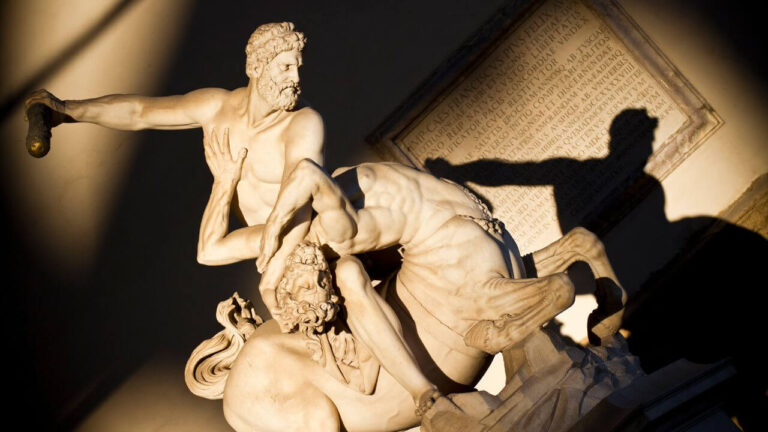
For certain people life entails more than making a living, solving problems and managing daily affairs;  for such people life should be passionate, heroic and meaningful. However, even the most down to earth persons start to realize as they grow older that certain event sequences and relationship patterns keep coming up in their lives, creating a personal and deeply engraved life scenario. In this workshop we will look into the myth of Hero as developed by Campbell and Jung and we will get a glimpse into our own life dynamics pertaining to the hero archetype.


Similar Posts

  • |

    Transference

    Some psychotherapy schools emphasize and explore the therapeutic relationship while others take it for granted. In this workshop we will find out how a transference relationship develops early in the therapeutic process independent of the theoretical perspective espoused by the therapist and the conscious feelings of the client for the therapist. Transference reactions which are not recognized as such block the therapeutic process, so it is useful for a therapist to be able to understand and work with these reactions as well as his/her own countertransferance feelings to the client.

  • |

    Family unconscious: Archetypes, family secrets and a child’s ‘destiny’

    In this workshop we will investigate the legacy of the family to its offspring. Not only talents but also traumas, secrets and unresolved conflicts passed down from one generation to the next.

    These unresolved issues play a significant role in the formation of current family relations and the « destiny» of each individual family member.

    Specifically we will examine:

    •   The archetypes emerging from the father and mother imagos
    •   The archetype of the black sheep and the scapegoat
    •   Incestuous themes in the family
    •   Motifs regarding jealousy, envy and death wishes aimed at the child
    •   Ways to deal with unresolved issues in our own family

    Several clinical vignettes will  be presented and you can bring your own cases for discussion.

  • |

    Clinical intuition

    Intuition is an invaluable asset for a clinician. Coupled with empathy, intuition helps the therapist to sense accurately the nonverbal messages of the client and to respond sensitively and appropriately to these cues.
    The aim of this workshop is to help participants understand and nurture their clinical intuition through the study of symbols, keeping a personal journal, using painting and guided imagery techniques.

  • |

    When therapy fails

    Unfortunately, despite our best efforts, we occasionally fail our clients. We either get into a rut or the client, under the pretext of lack of money or time, leaves therapy prematurely.
    In this workshop, we will examine the conditions indicating early in therapy that things may falter later on. Then we will see in actual clinical cases the impact of certain issues that are common in almost every treatment:

    Self disclosure of the therapist
    Client’s idealization of the therapist
    The masochism of the therapist

    Participants are welcome to bring their own cases for discussion.

  • |

    Ethical dilemmas in psychotherapy

    Many therapists believe that ethical issues seldom rise in the course of a treatment. Furthermore, they believe that since they behave ethically in all aspects of their lives, naturally their behavior will not provoke ethical conflicts in their professional work.
    However, many issues of ethics are so common and so subtle that they slip by unnoticed, having managed to corrode the therapy process. In this workshop we will discuss some of the more salient issues such as the therapist’s self-disclosure, boundary problems, confidentiality when working with more than one client; we will also discuss more subtle forms of ethics such as the conflict between the values of the therapist with those of the client.
    Actual cases will be presented to highlight these points and you can bring your own for discussion.